
The Growing Together Project
South Canoe students in Ceren Caner’s class had the opportunity to plant and learn about a traditional Secwepemc food as part of the Growing Together Project, a project which was the brainchild of Elder and Knowledge Sharer (as he refers to himself) Louis Thomas.
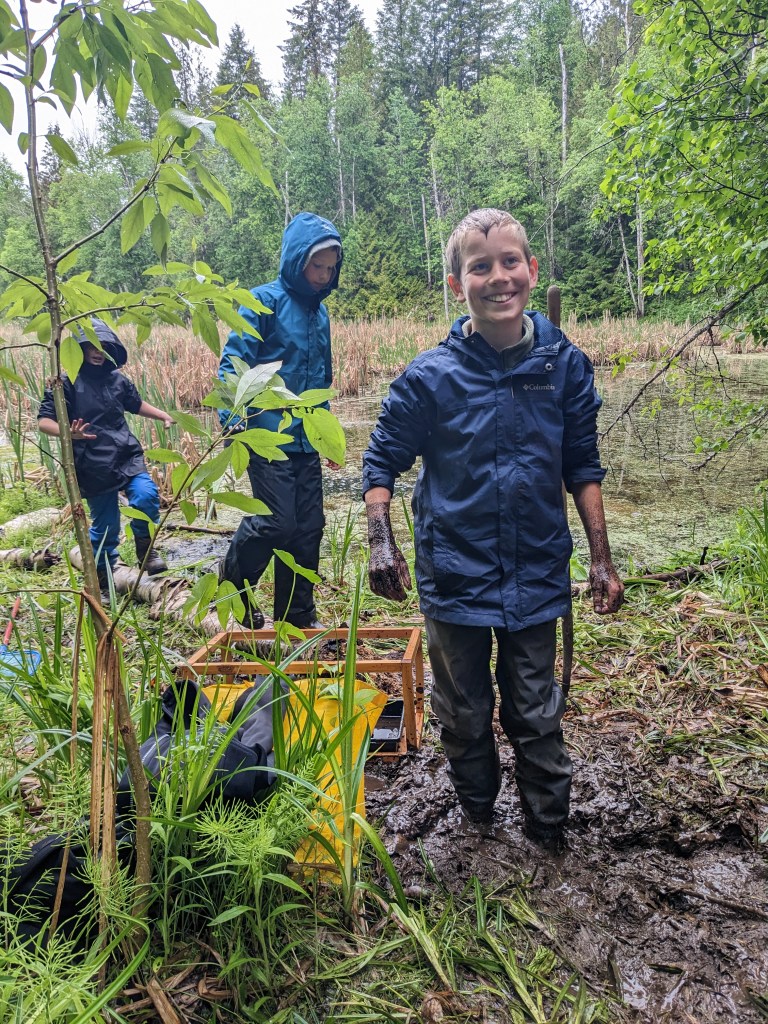
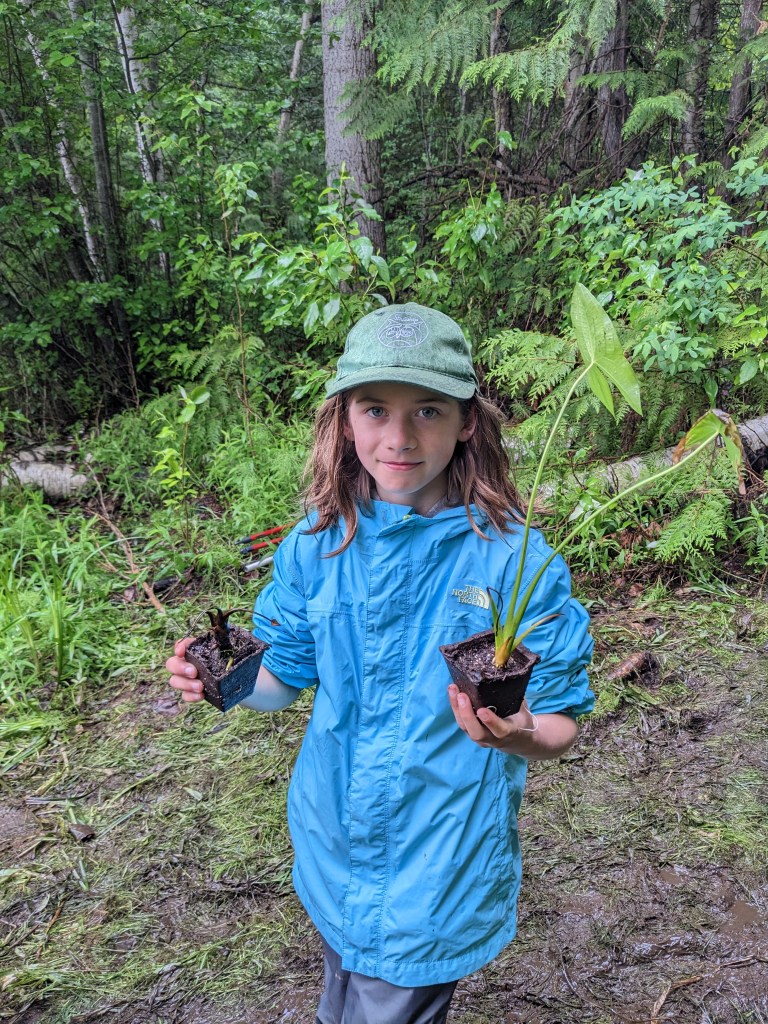
With the help of Thomas, Kim Fulton, and Louis’ sister-in-law Mary Thomas, the students recently planted Wapato, an edible root that grows in wetlands, at a pond on a neighbour of the school’s property. In the fall the plan is to harvest this tuber plant and then have a celebration!
Wapato is a traditional food of Secwepemc Peoples that has virtually disappeared as a result of development/loss of wetlands.
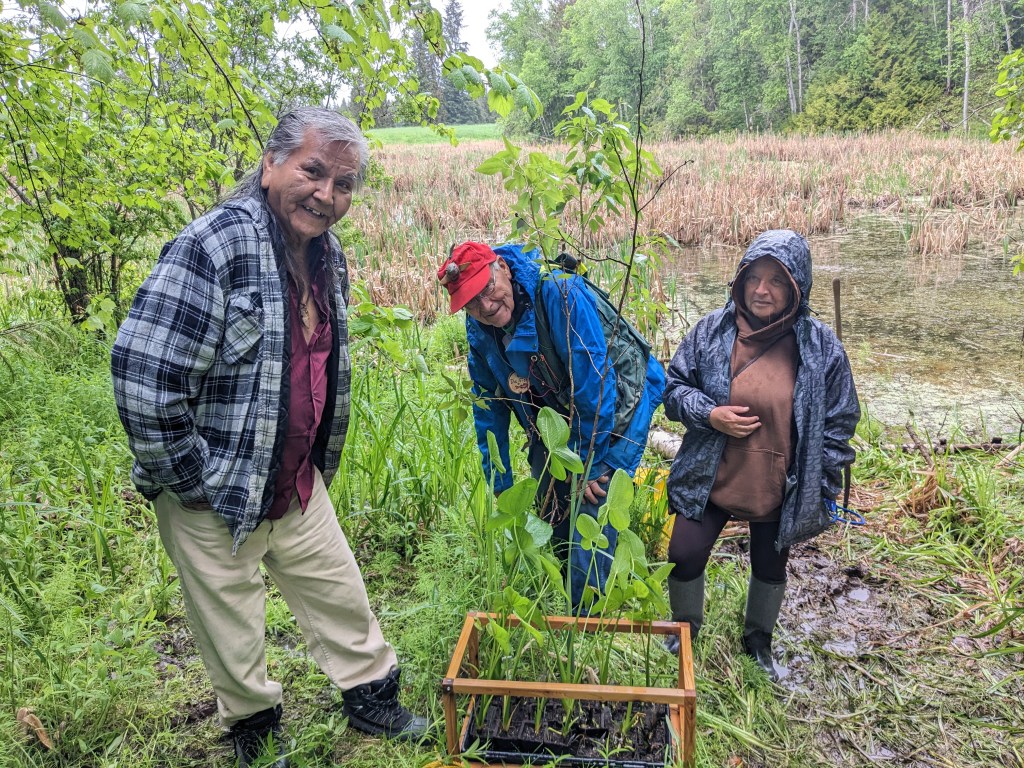
Louis Thomas, former councillor for the Neskonlith Band, respected Elder, Knowledge Sharer, son of Dr. Mary Thomas, and well-known education advocate connected with Fulton with a proposal to work with students to grow a traditional food and to apply to The Real Estate Foundation of BC’s General Grants program for some “seed” funding to get the program going. The foundation funds time-bound projects involving public education, professional education, applied research, policy analysis, and law reform activities that advance sustainable, equitable, and socially just land use and real estate practices in British Columbia.
The idea is to plant ckwalkwalus (wapato) (Sagittaria latifoli) and other traditional, Indigenous food sources on traditional lands and at SD83 schools. The plan is to involve school children, local experts, Indigenous elders, and community members in planting, tending, and eventually harvesting these plants for ceremonial and celebratory purposes, which is why they are calling it the Growing Together Project.
The project will involve School District 83 students working with Louis Thomas and district Indigenous Education staff to plant, tend, harvest, and sample traditional food plants. One main focus will be to restore wapato to the Salmon River Delta area. Another plant they hope to propagate and restore to the area is tnis highbush cranberry. Ckwalkwalus is the Secwempemc name for wapato, which means something along the lines of eyeballs looking at you, as the tuber looks like an eyeball. Louis says his grandmother harvested ckwalkwalus/wapato at the mouth of the Salmon River and around the shoreline of Shuswap Lake. They contain many essential vitamins and minerals and have been called a “cultural keystone” species.
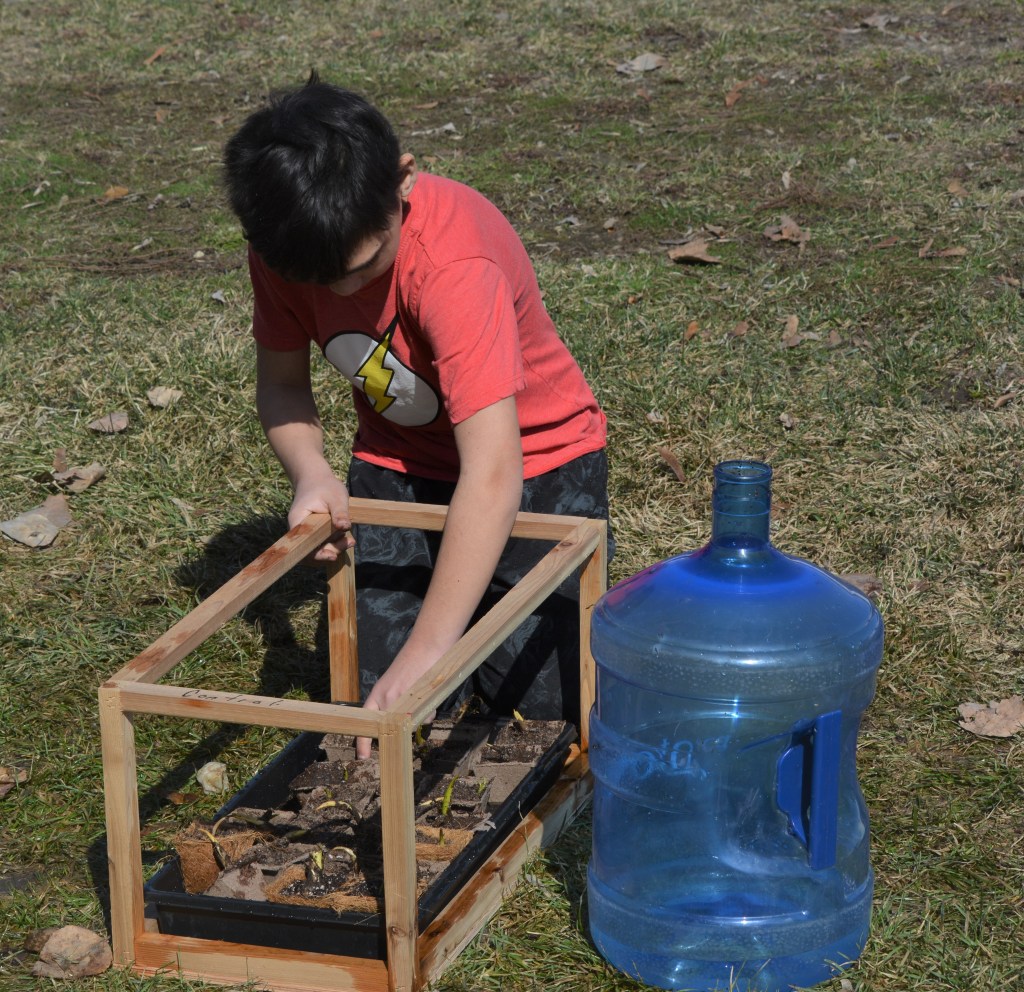
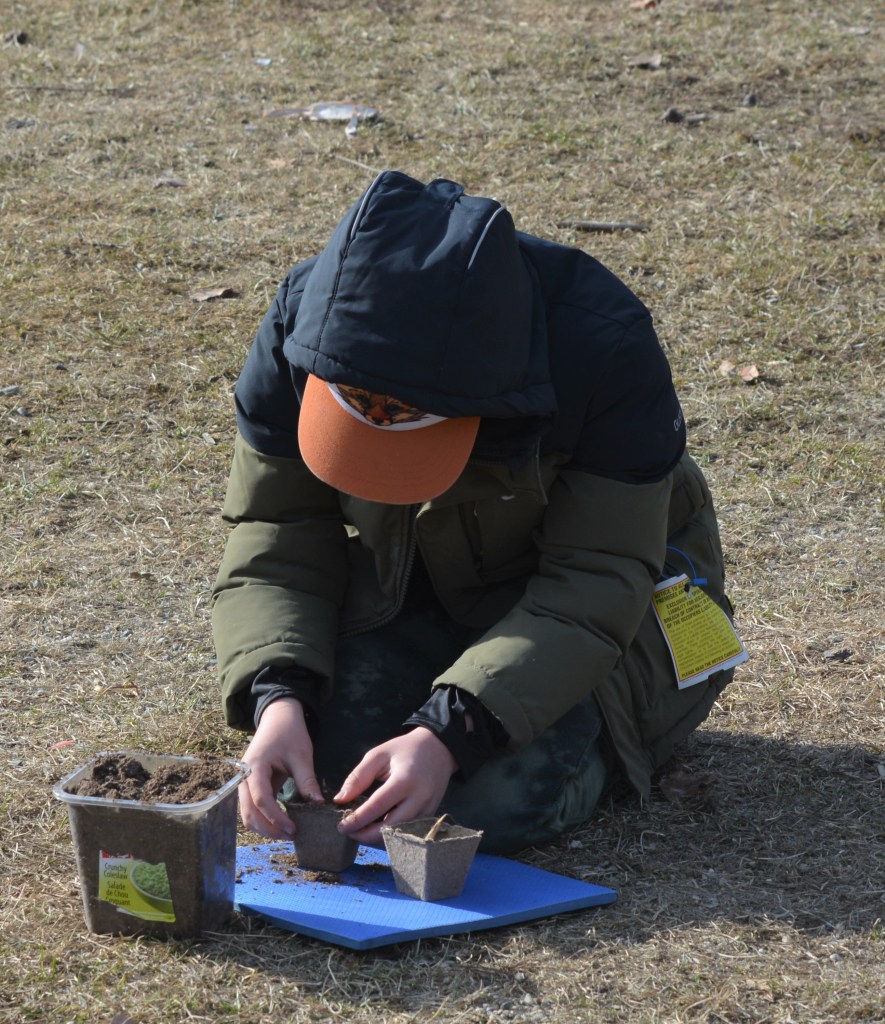
Wapato has disappeared from the area, explains Fulton so the tubers were purchased from an aquatic plant nursery on Vancouver Island and stored in the fridge for eight weeks. Two classes raised the tubers in water-filled trays in the classroom, Caner’s class from South Canoe and Jake Jacobson’s class from Salmon Arm West.
The goal is to harvest the tubers in the fall (usually done in bare feet and releasing the tubers which float to the surface). They hope to have a celebratory feast including elders, community members, and students. “We hope to use traditional pit cooking methods to prepare the food under the guidance of elders and knowledge keepers,” adds Fulton.
Organizers hope the project, which they hope will continue for many years, will address the B.C. curriculum (using inquiry, cross curricular, and multidisciplinary approaches), will create understanding and friendships by working together with diverse groups who normally don’t work together, demonstrate caring for our environment through ethical action, create a feeling of hope for the future, promote First Peoples Principles of Learning and “Two Eyed Seeing” combining western science with Indigenous ways of knowing, and promote the use of locally grown, nutritional plants.
“The dream objective would be to see people of diverse ages, backgrounds, occupations, and world views, knee deep in a wetland digging and collecting Ckwalkwalus/Wapato with their toes,” he adds.
Fulton and Thomas comment that it is important to do these types of projects now because Elders and Knowledge Keepers are aging, and it is important to share that knowledge now. Also, they comment as people are bombarded with negative news there is a growing feeling of despair, particularly among youth. “We believe taking positive action DOING something helps create a feeling belonging, accomplishment, and pride. After years of tree planting with students we have never seen anyone not feel great about planting, caring for, and watching trees grow.”