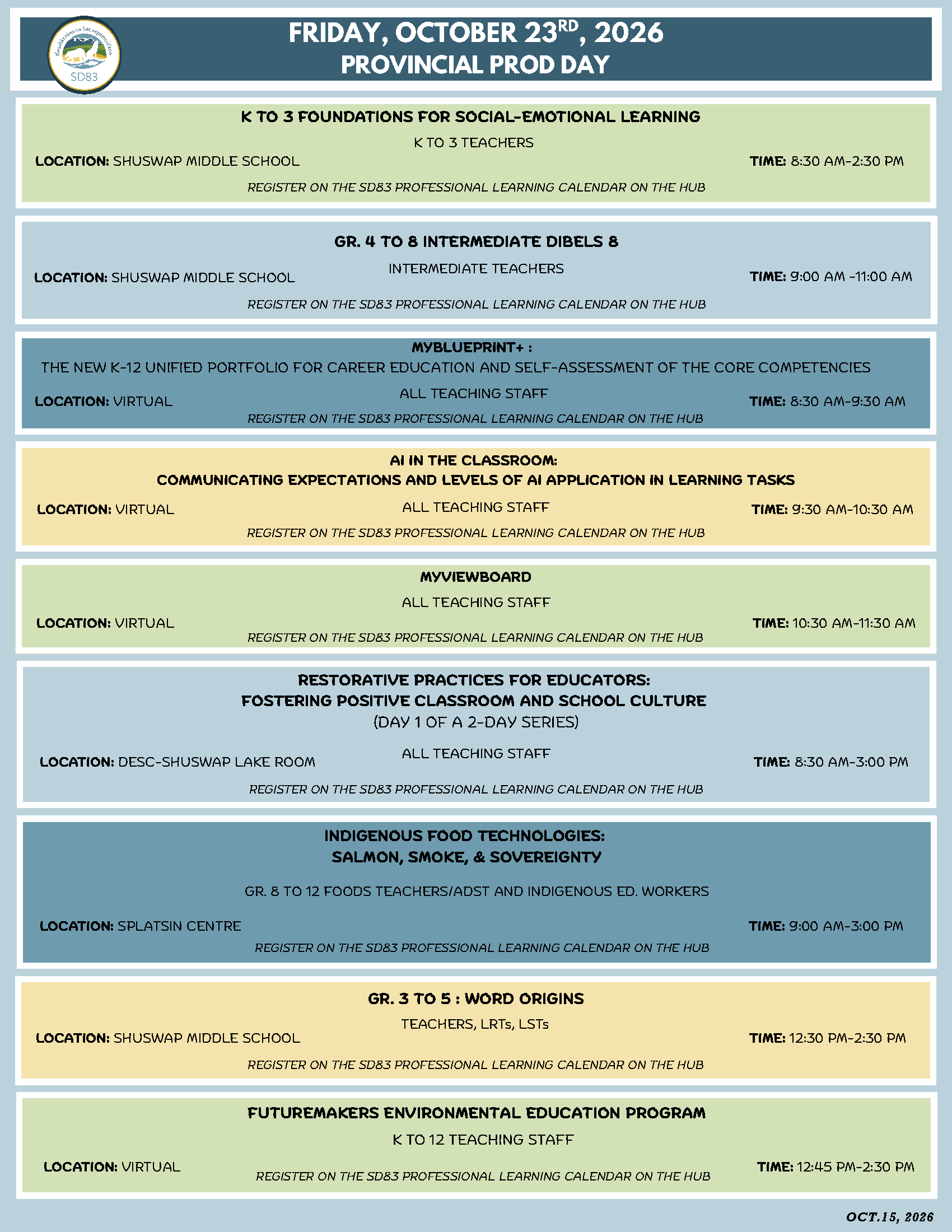
October 23, 2026, Pro-D Update
On October 23, 2026, educators from across SD83 attended a day of pro-d focused on enhancing student learning, well-being, and success. Staff participated in a variety of sessions tailored to different grade levels, subject areas, and ares of professional practice. Topics included literacy assessment and instruction, social-emotional learning, restorative practices, Indigenous food technologies, environmental education, career education, artificial intelligence in the classroom, and digital learning tools. These learning opportunities provided staff with practical strategies and collaborative experiences to support students in classrooms across the District.
The diverse range of sessions reflected the District's commitment to the Strategic Plan priorities of Intellectual Development, Human and Social Development, and Career Development by supporting educators in creating engaging, responsive, and inclusive learning environments for all students.
The following examples illustrate how staff engaged in meaningful learning experiences that they can bring back to their classrooms.
Indigenous Food Technologies: Salmon, Smoke, and Sovereignty
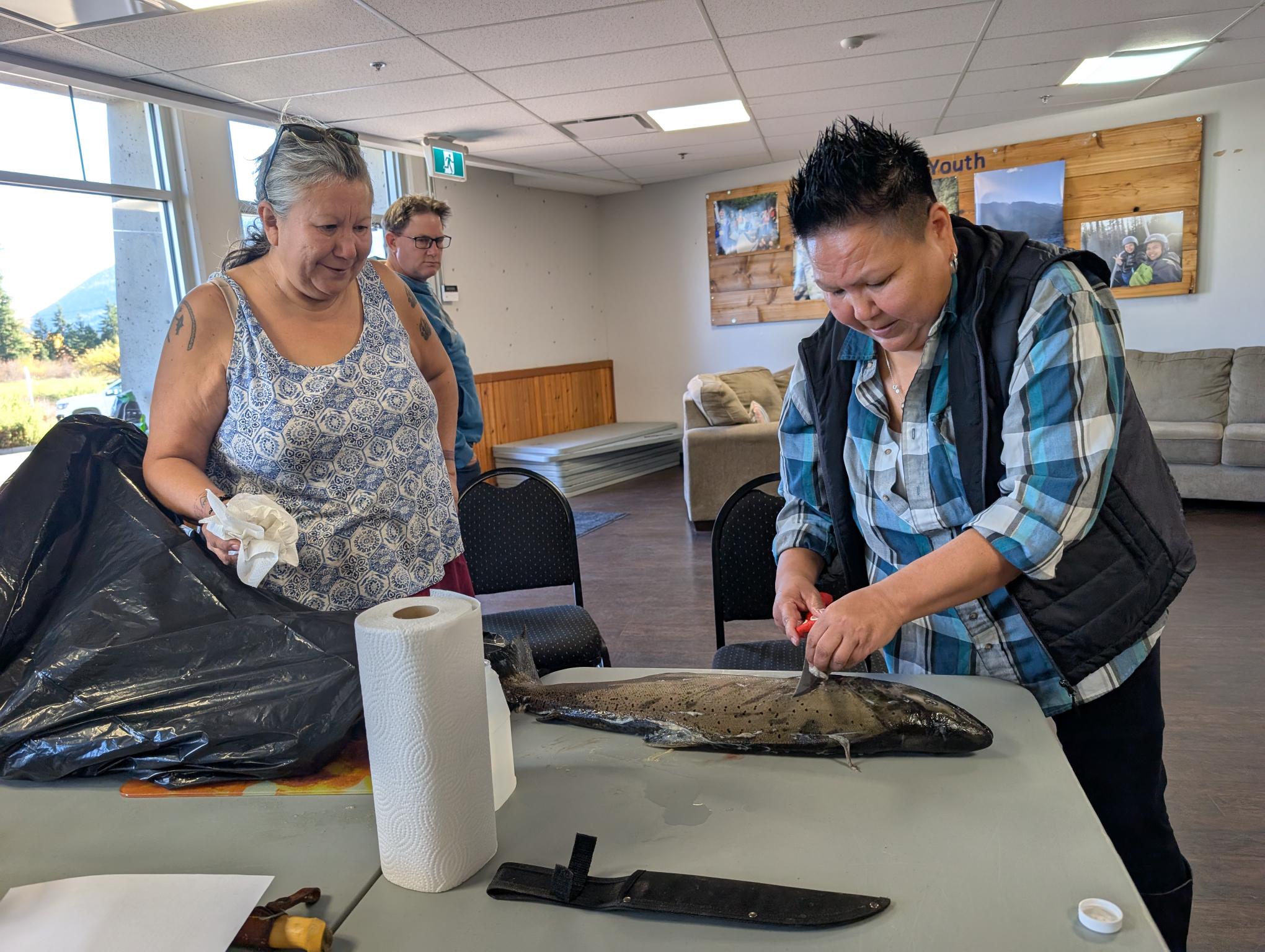
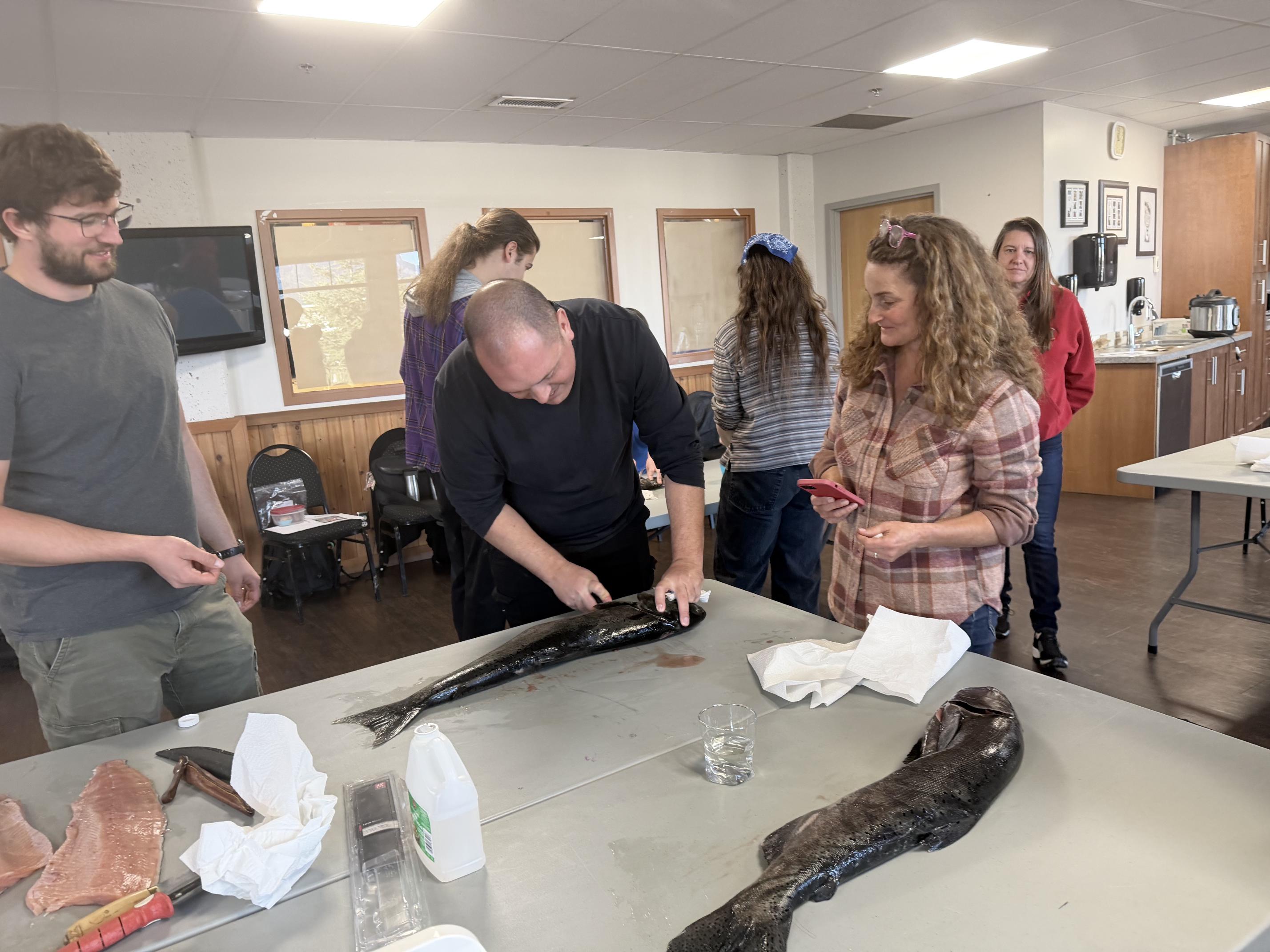
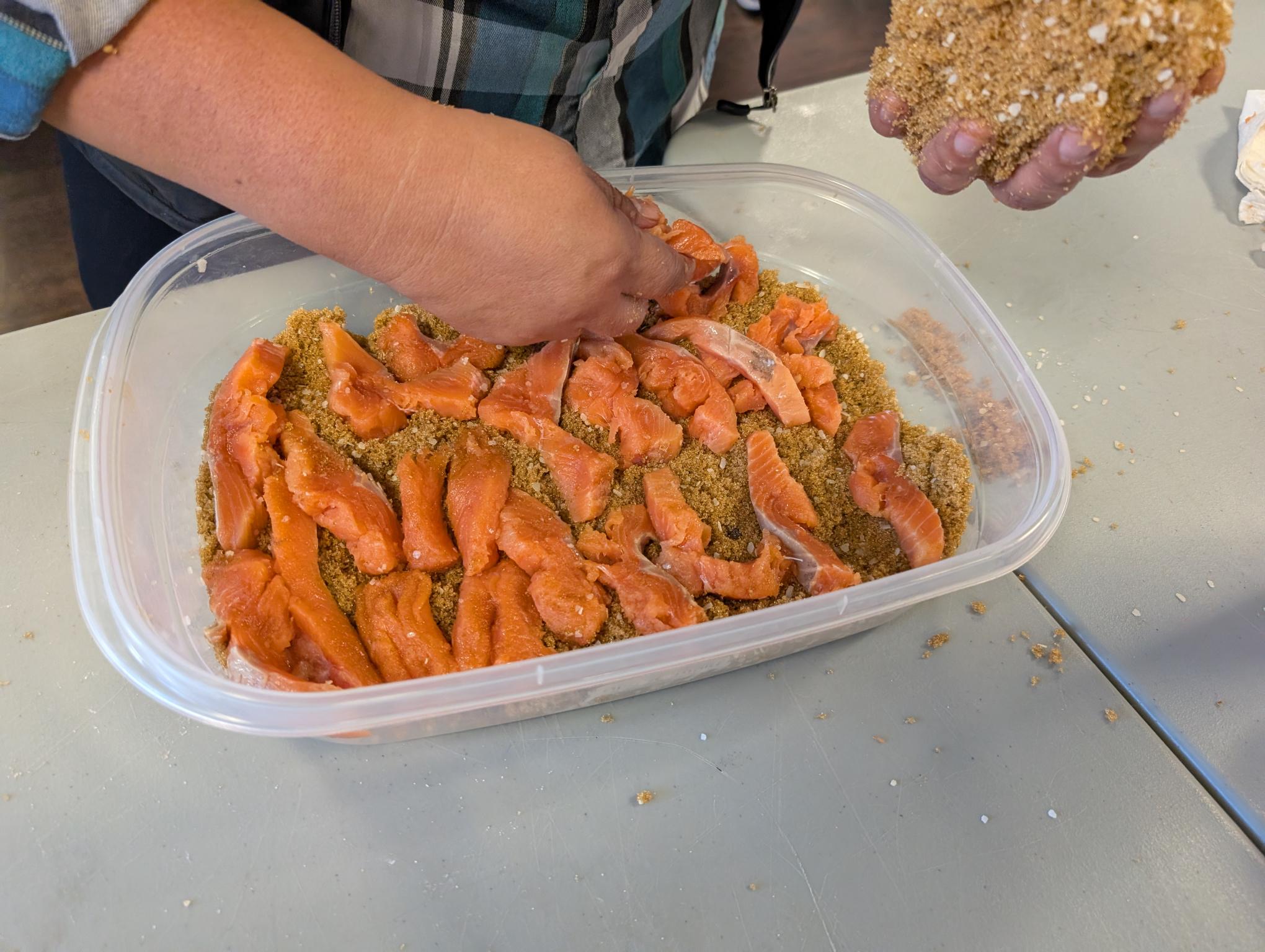

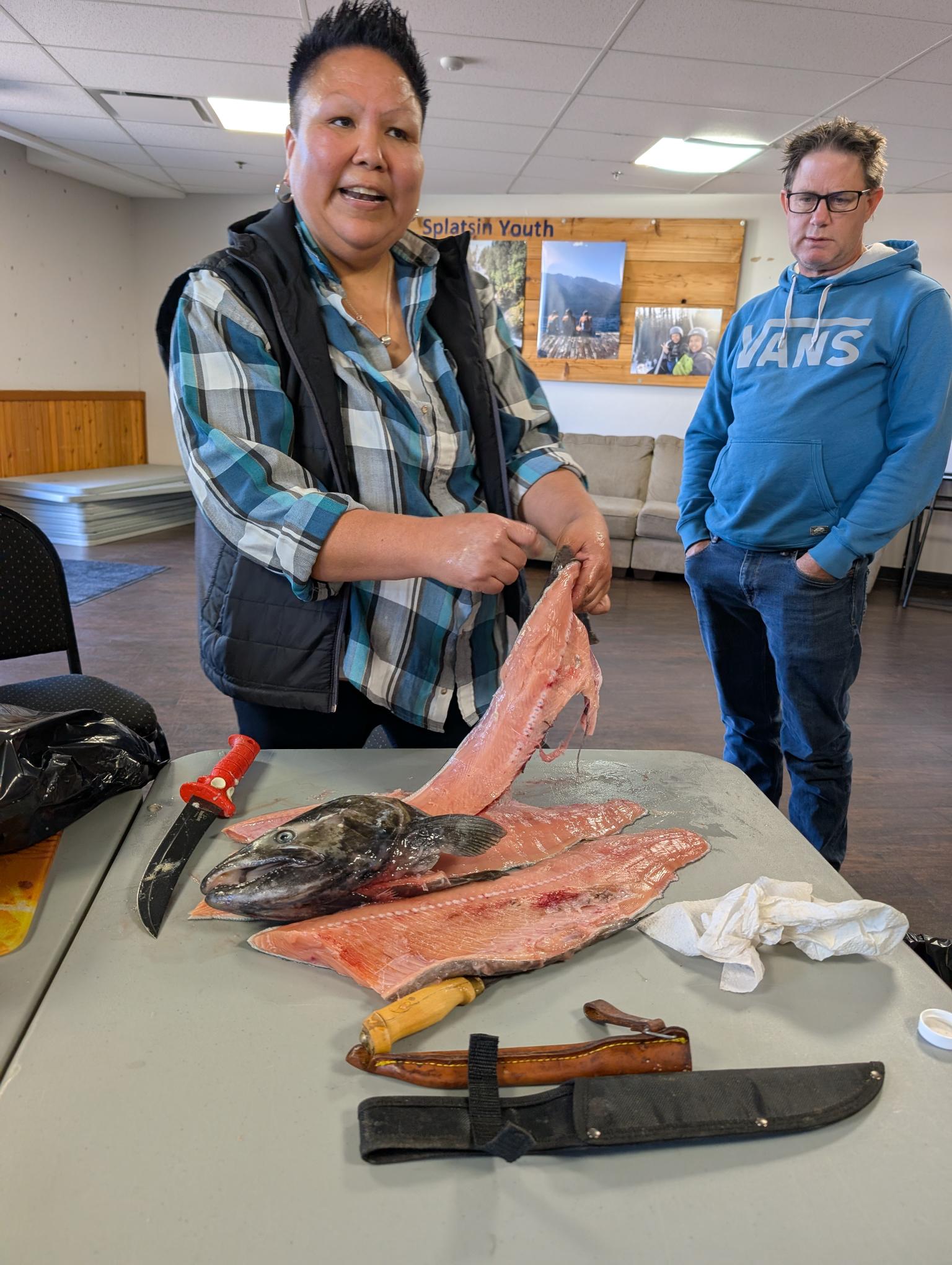
Grade 8-12 Foods and ADST Teachers and Indigenous Education Workers participated in a professional learning opportunity with Splatsin Knowledge Keepers Jody Leon and Vanessa Cardinal.
Participants learned about salmon fishing and preparation practices through hands-on experiences, including filleting salmon, safely using the SD83 wood pellet smoker, and making candied salmon.

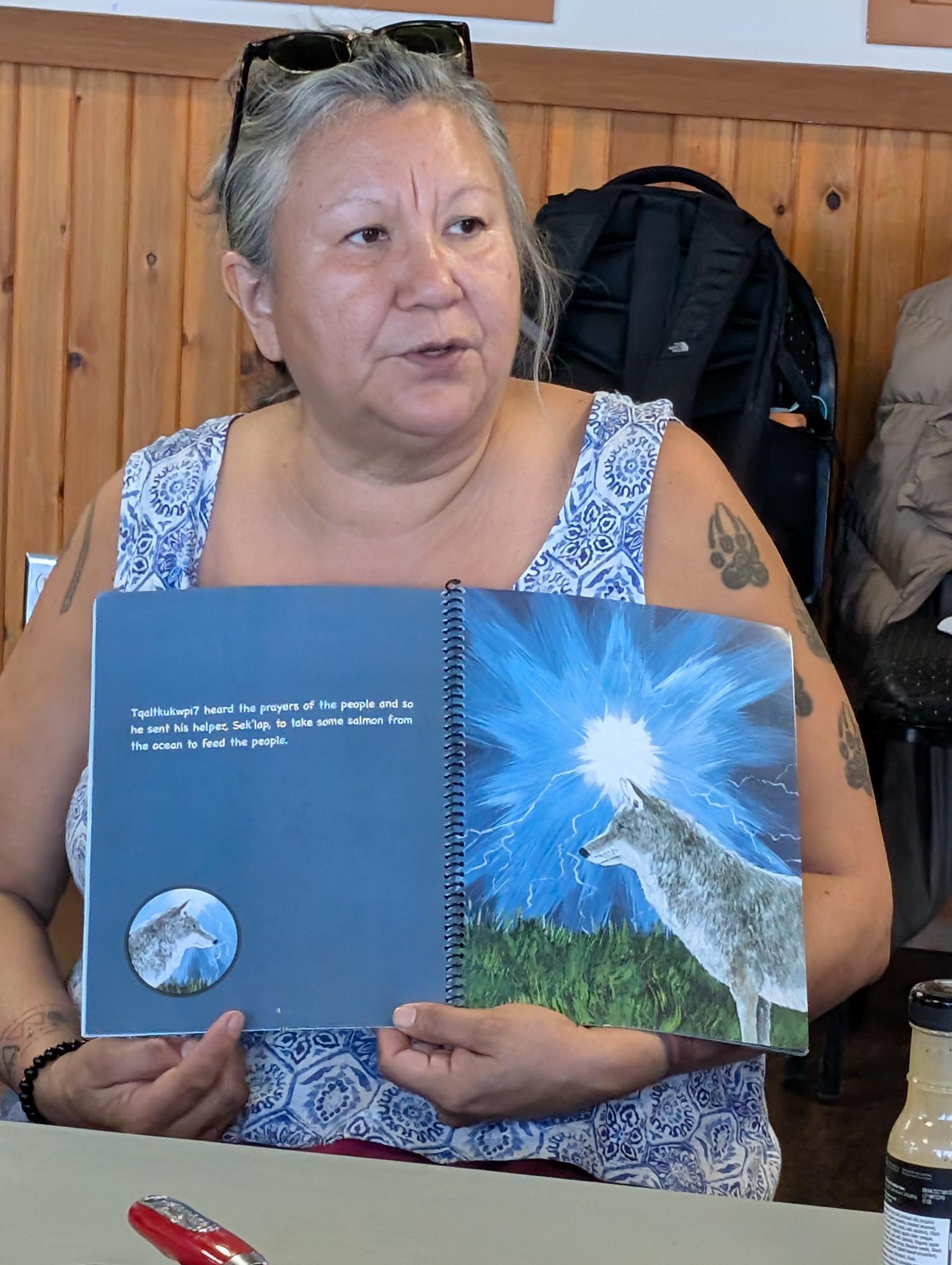
The day also provided an opportunity to deepen understanding of the cultural significance of salmon to Secwepemc Peoples. Through discussion and shared learning, participants explored the impacts of colonization on food security and food sovereignty for Indigenous Peoples across Turtle Island, while gaining valuable knowledge to bring back to their classrooms and school communities.
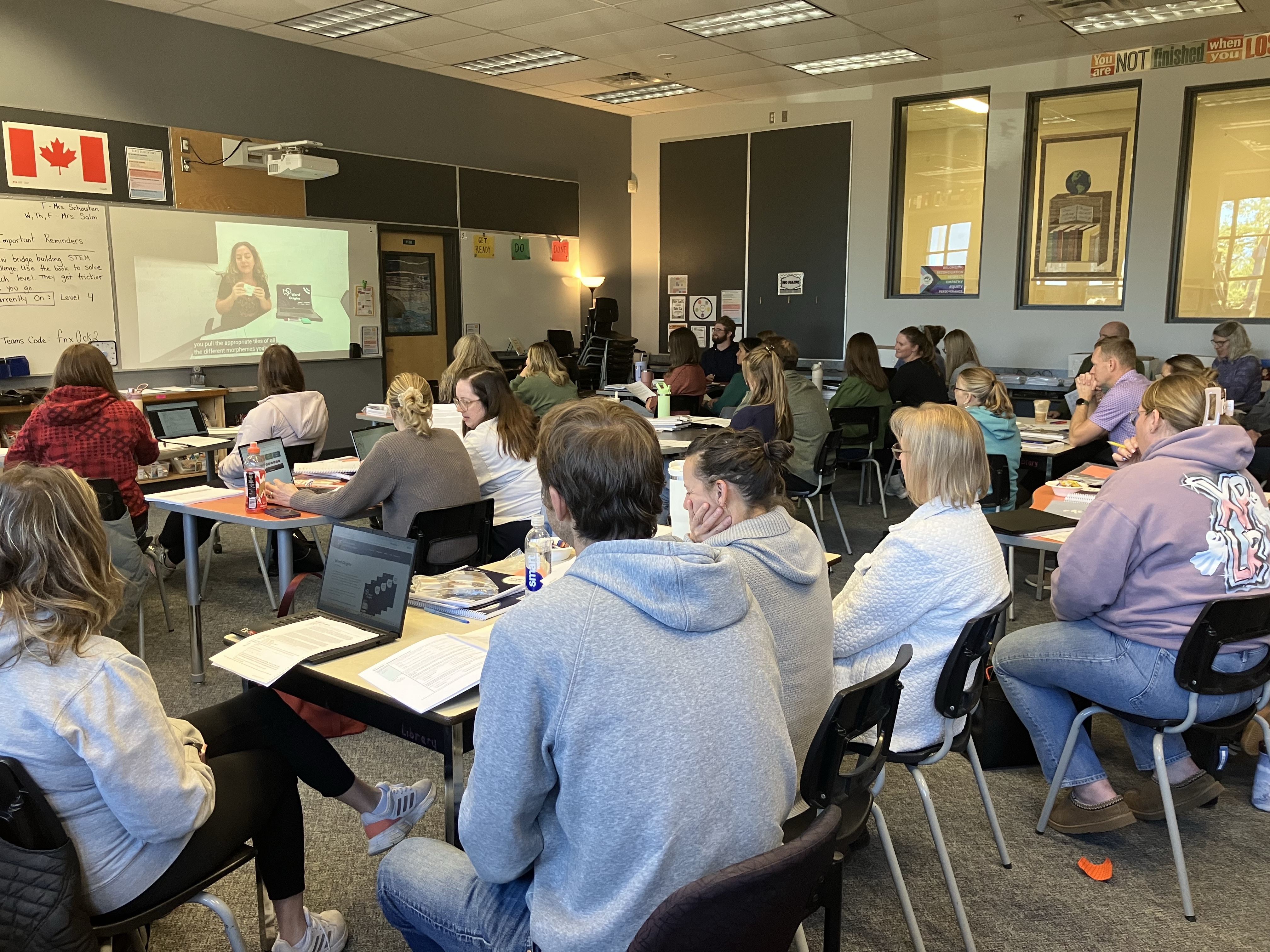
Grade 3 to 5: Word Origins
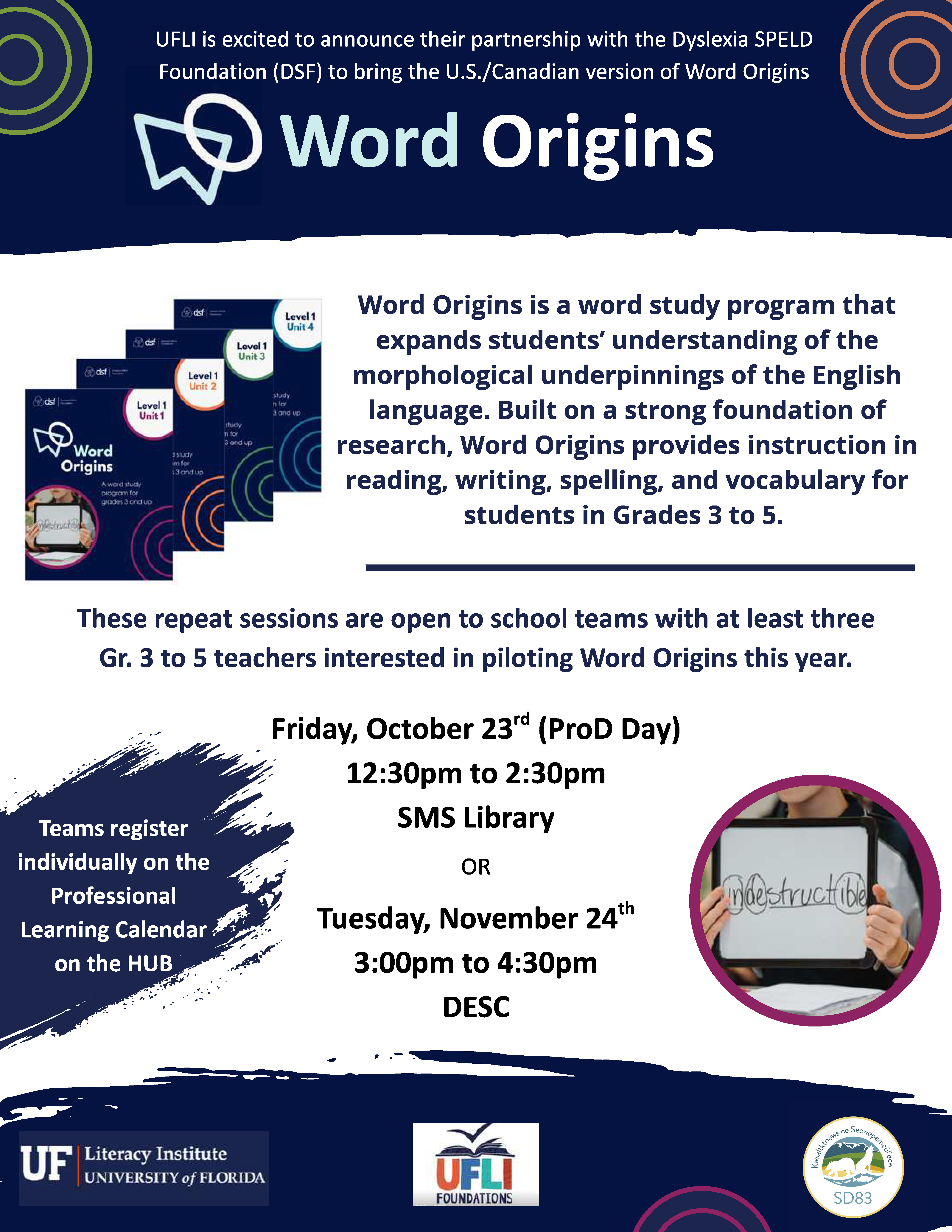
Word Origins, a research-based word study program designed to strengthen literacy instruction for students in Grades 3 to 5, was introduced to teachers as an approach to helping students develop a deeper understanding of the structure and meaning of words through the study of morphology, the building blocks of language. By exploring word origins, prefixes, suffixes, and roots, students can strengthen their reading, writing, spelling, and vocabulary skills.
Word Origins was developed on a strong foundation of literacy research and is available through a partnership between the University of Florida Literacy Institute (UFLI) and the Dyslexia SPELD Foundation (DSF). The program has been adapted for use in Canada.
The session provided teachers with an opportunity to learn about the program and consider its potential use in their classrooms. Participating educators explored instructional approaches that support students in developing stronger word knowledge while building confidence as readers and writers.
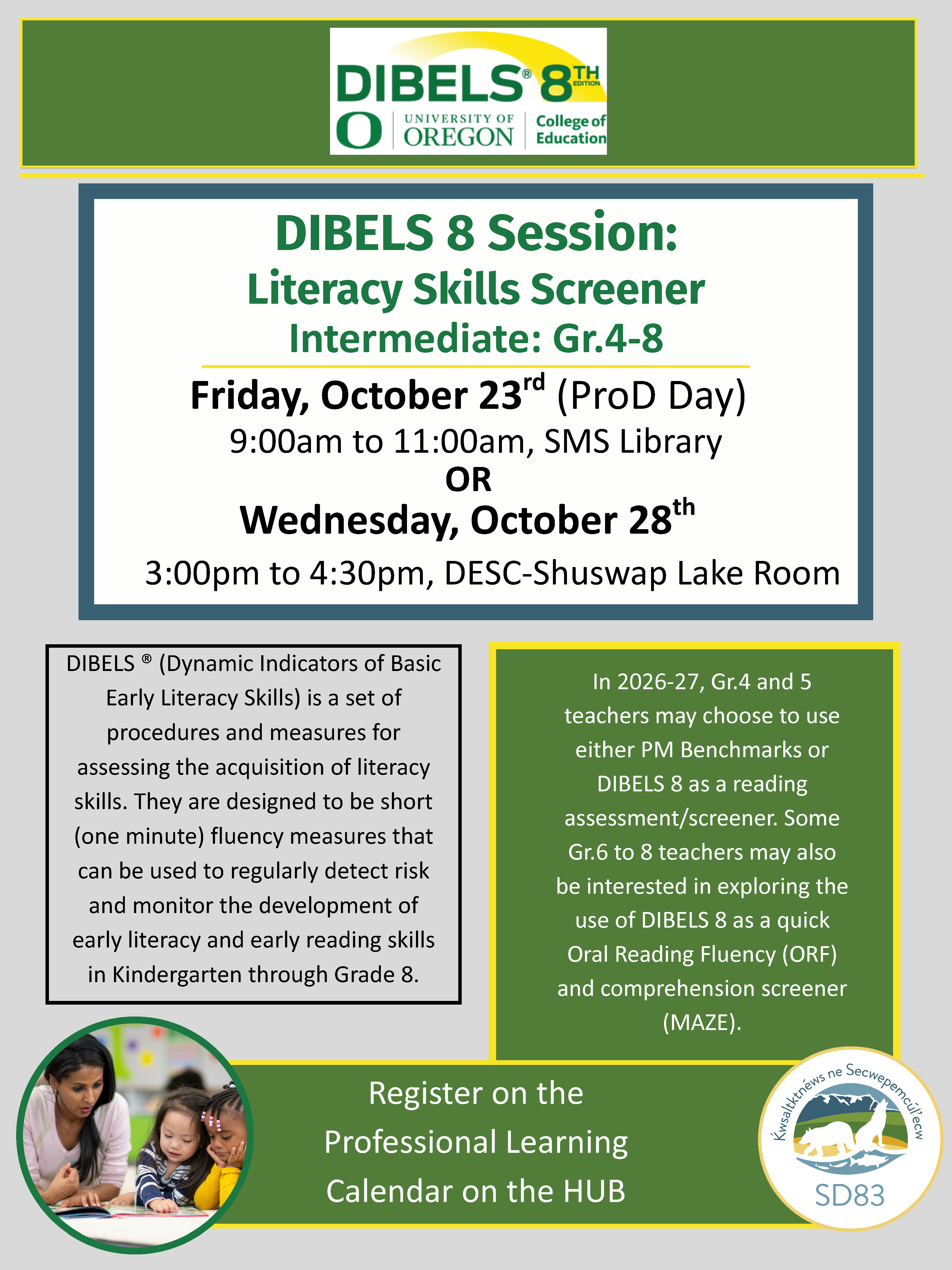
Grade 4 to 8 Intermediate DIBELS 8
Grade 4 to 8 teachers from across the District participated in a pro-d session on DIBELS 8, a research-based literacy assessment tool designed to help teachers monitor and support students' reading development.
The session introduced teachers to DIBELS 8 (Dynamic Indicators of Basic Early Literacy Skills), a set of brief literacy measures used to assess reading skills, identify students who may require additional support, and monitor progress over time. The assessments are designed to provide educators with timely information about students' literacy development from Kindergarten through Grade 8.
For the 2026-27 school year, Grade 4 and 5 teachers have the option of using either PM Benchmarks or DIBELS 8 as a reading assessment and screening tool. The session also explored how some Grade 6 to 8 teachers may use DIBELS 8 measures, including Oral Reading Fluency (ORF) and MAZE comprehension screening, to support literacy instruction in intermediate classrooms.
By learning how to use literacy screening tools effectively, educators can better identify students' strengths and areas for growth, helping to ensure instruction is responsive to individual learning needs. This early identification and targeted support can play an important role in helping students build confidence and proficiency as readers.